
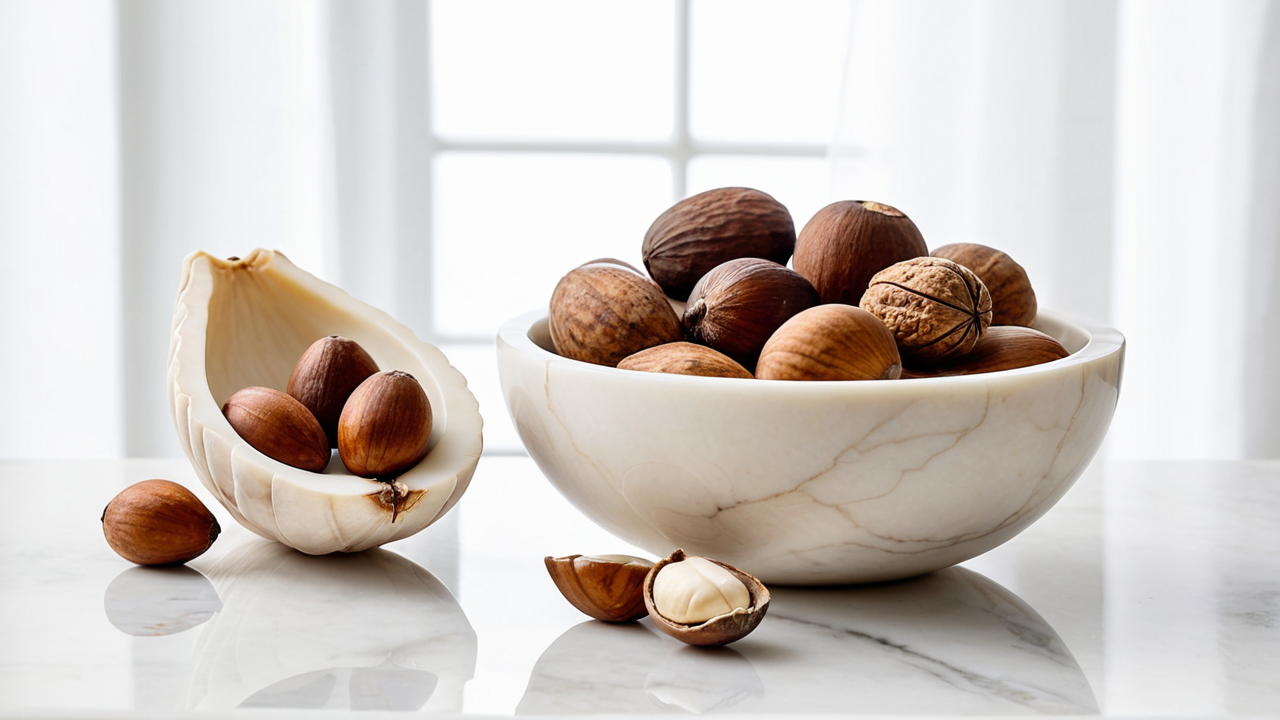
It looks like ivory. It feels like ivory. Skilled artisans carve it, polish it, and dye it into some of the most beautiful jewelry and decorative objects in the world. And it comes entirely from a palm tree — no animals harmed, no mining required, no environmental destruction.
This is vegetable ivory, and the more you learn about it, the harder it is not to fall in love with it.
Whether you’ve just received your first piece of tagua jewelry and want to understand what it’s made from, or you’re a sustainability advocate looking to learn about one of nature’s most remarkable materials, this guide covers everything — from the biology of the tagua palm to the artisan communities that depend on it, to how it compares to other eco-friendly materials and where to find the best tagua products today.
What is Vegetable Ivory?
Vegetable ivory is the common name for the hardened endosperm — the inner seed — of certain palm trees, most notably the Phytelephas species native to the tropical rainforests of South America. When fresh, the seed has the consistency of a hard-boiled egg white. As it dries over several months in the open air and sun, it hardens progressively until it reaches a density and texture remarkably similar to animal ivory.
The name “vegetable ivory” dates back to the 19th century, when European traders first encountered the material and recognized its resemblance to the elephant ivory being traded — and exploited — at the time. Botanists, craftspeople, and conservationists quickly recognized its potential as a cruelty-free, renewable alternative, and the material has been used in everything from buttons to chess pieces to fine art sculpture ever since.
Today, vegetable ivory is most commonly known through tagua nut jewelry — and for good reason. Tagua takes natural and synthetic dyes beautifully, can be carved into intricate shapes, polished to a smooth finish, and worn comfortably against the skin. It has also become one of the most compelling stories in the sustainable fashion world.
Where Does Tagua Come From?
The primary source of vegetable ivory is the Phytelephas macrocarpa palm tree, found throughout the tropical lowland rainforests of Ecuador, Colombia, Peru, Bolivia, and Panama. Ecuador is by far the world’s largest producer and exporter of tagua, with the coastal and Andean foothills regions supporting dense natural populations of the tree.
The palm grows slowly — it can take 15 years to reach full maturity — but once established, it produces fruit clusters for decades without being cut down. Each cluster contains multiple seeds (the tagua nuts), which fall naturally from the tree when ripe. Harvesters simply collect them from the forest floor — no cutting, no uprooting, no damage to the living tree.
This harvesting model is one of the things that makes tagua so remarkable from a conservation standpoint. The tree is never harmed in the process, and because the palm thrives in undisturbed rainforest, communities that make their living from tagua have a powerful economic incentive to protect the forest rather than clear it for agriculture or logging.
The Tagua Belt: Ecuador’s Heartland
In Ecuador, the primary tagua-producing regions are concentrated along the Pacific coastal lowlands — particularly in the provinces of Manabí, Esmeraldas, and Los Ríos. The town of Montecristi, famous for its superfine Panama hats, is also a centre of tagua craftsmanship. Further inland, artisan communities in the Andean foothills have developed their own carving traditions, producing everything from animal figurines to intricate beaded jewelry.
The tagua trade is an important part of Ecuador’s rural economy. Thousands of families across the country are involved in the harvest, processing, dyeing, carving, and export of tagua products — making it a genuine community livelihood, not just a niche craft.
How Tagua Nuts Are Processed
The journey from forest floor to finished jewelry is a fascinating one. Here’s how it works:
1. Harvesting
Ripe tagua fruit clusters fall naturally from the palm. Harvesters — often entire families — collect them from the ground during harvest season. The outer fibrous husk is removed to reveal the individual seeds inside, each roughly the size of a large walnut or small hen’s egg.
2. Drying
Fresh tagua seeds are soft and moist — completely unworkable as a craft material. They’re spread out in the sun and air-dried for several weeks to several months, depending on conditions. As the moisture evaporates, the endosperm hardens progressively. Fully dried tagua is dense, hard, and ivory-white — ready to work.
3. Cutting and Shaping
Dried tagua nuts are sliced, cut, and shaped using saws, lathes, chisels, and hand tools. The material cuts cleanly and holds detail well, making it suitable for everything from simple round beads to intricate carved figurines. The natural surface of the nut often has a beautiful grain — like fine bone — that skilled carvers can work with to enhance the final piece.
4. Dyeing
One of tagua’s most remarkable properties is its ability to absorb dye deeply and evenly throughout its structure — not just on the surface. Ethical producers use non-toxic vegetable dyes or food-safe synthetic dyes to colour pieces in virtually any hue, from soft earth tones to vivid tropical shades. Because the dye penetrates the full depth of the material, the colour doesn’t chip or peel off over time the way painted finishes do.
5. Polishing and Finishing
After dyeing, pieces are polished by hand or machine to achieve the desired finish — from a matte, natural look to a high-gloss shine. Finishing agents, when used, are typically natural waxes or lacquers. The finished pieces are then assembled into jewelry, decorative objects, or other products by artisans.
Vegetable Ivory vs. Animal Ivory: What’s the Difference?
The visual and tactile similarity between tagua and elephant ivory is striking enough that the two have been confused — and occasionally substituted for each other — for over a century. Here’s how they actually compare:
| Property | Tagua (Vegetable Ivory) | Animal Ivory |
|---|---|---|
| Source | Palm tree seed | Elephant, walrus, or narwhal tusk |
| Colour | Creamy white, ages to warm honey | White to cream, ages to yellow |
| Hardness | Very hard (similar to dense bone) | Hard (similar to dense bone) |
| Workability | Carves and polishes well | Carves and polishes well |
| Dye absorption | Excellent — full depth penetration | Limited — surface absorption only |
| Environmental impact | Zero — renewable, forest-positive | Devastating — drives poaching and extinction |
| Legal status | Fully legal worldwide | Heavily restricted or banned in most countries |
| Price | Accessible | Extremely high (where legal) |
| Renewable | Yes — palm produces for decades | No |
In virtually every practical comparison, tagua equals or outperforms animal ivory — particularly in its dyeability, renewability, and legal status. The only area where animal ivory has traditionally been preferred is in very large-scale carvings, where a tagua nut’s size limits what’s possible. For jewelry and small decorative objects, tagua is in every way the superior choice.
Why Tagua Matters: The Conservation Story
The tagua nut’s environmental story goes far beyond simply being a “natural material.” It’s one of the most compelling examples of conservation through commerce — the idea that giving a rainforest economic value is the most powerful way to protect it.
Ecuador has lost significant portions of its Pacific coastal rainforest to cattle ranching, palm oil plantations, and agriculture. The communities that remain in and around these forests face constant economic pressure to convert land for short-term income. Tagua provides an alternative: a sustainable, renewable harvest that requires the forest to remain standing.
When a family earns their livelihood from tagua, the forest becomes their most valuable asset. Clearing it would destroy their income. This creates a powerful, self-sustaining economic incentive for conservation that no amount of regulation alone can replicate.
Research by conservation organizations has shown that tagua harvesting communities maintain significantly higher rates of forest cover than neighbouring communities without similar forest-based livelihoods. In this sense, every piece of tagua jewelry is not just a beautiful accessory — it’s a small act of conservation.
Tagua and the Global Button Industry
Most people are surprised to learn that tagua’s biggest historical market wasn’t jewelry — it was buttons. In the late 19th and early 20th centuries, tagua nuts were the primary material used for shirt and coat buttons across Europe and North America. At its peak, Ecuador was exporting thousands of tonnes of tagua per year to button factories in Germany, France, the United Kingdom, and the United States.
The industry collapsed almost overnight in the 1940s when petroleum-based plastics — specifically urea-formaldehyde and nylon — became widely available and dramatically cheaper. Overnight, tagua went from a global commodity to a forgotten material, and the communities that depended on it were left without their primary income source.
The revival began in the 1980s and 1990s, driven partly by conservation organizations and partly by the growing sustainable fashion movement. Today, a small number of premium clothing brands still use tagua buttons — most notably Patagonia, which has used them for decades as part of its commitment to natural materials. In the broader market, the jewelry industry has become tagua’s primary contemporary outlet.
What Can Tagua Be Used For?
Tagua’s versatility is one of its most underappreciated qualities. While jewelry is the most common contemporary use, the material has been worked into an impressive range of products:
- Jewelry — earrings, necklaces, bracelets, rings, pendants. The most popular contemporary use, and the one most accessible to consumers worldwide.
- Buttons — still used by premium clothing brands including Patagonia, Eileen Fisher, and some European fashion houses as a sustainable alternative to plastic.
- Figurines and sculptures — Ecuadorian artisans carve tagua into animals, religious figures, and abstract sculptures of remarkable detail. These are highly collectable.
- Chess pieces — tagua’s density and workability make it ideal for chess sets. Hand-carved tagua chess sets are regarded as among the finest available.
- Knife handles and tool grips — historically used in cutlery and fine tools for its durability and feel.
- Decorative inlays — used in furniture and musical instruments as an ivory substitute for decorative detail work.
- Beads and accessories — used in rosaries, prayer beads, bag hardware, and fashion accessories.
Is Tagua Jewelry Right for You?
If you’re considering buying tagua jewelry for the first time, here’s what you should know:
It’s hypoallergenic
Tagua is 100% plant-based with no metal components, making it an excellent choice for people with nickel allergies or metal sensitivities. It’s also naturally non-toxic, and quality producers use skin-safe dyes throughout.
It’s lightweight
Despite its hardness, tagua is significantly lighter than stone or metal jewelry. A full necklace and earring set in tagua is comfortable to wear all day without the neck fatigue that heavy metal pieces can cause.
It’s unique
Because each piece is hand-carved and hand-dyed from a natural seed, no two tagua pieces are exactly alike. The variation in grain, colour depth, and finish gives each piece its own character — something mass-produced jewelry simply cannot replicate.
It needs simple care
Tagua is durable but benefits from a few simple care habits: keep it away from prolonged water exposure, store it in a soft-lined compartment, and give it an occasional wipe with a natural oil to maintain its shine. For a complete guide, see our post on how to care for tagua jewelry.
It’s genuinely ethical
Few materials can match tagua’s ethical credentials: it’s plant-based, harvested without harming the tree, processed by artisan communities earning fair wages, and directly tied to rainforest conservation. When you buy from a responsible retailer, you’re participating in a supply chain that’s genuinely good for the planet and the people involved.
Where to Buy Tagua Jewelry in Canada
Tagua jewelry is available through a small number of ethical importers and specialty retailers who work directly with Ecuadorian artisan communities. When shopping for tagua, look for sellers who:
- Disclose where their tagua comes from
- Work directly with artisans (rather than through anonymous middlemen)
- Use non-toxic dyes
- Don’t coat pieces in synthetic resins that hide the natural material
At Mocoche, we source our tagua jewelry directly from artisan communities in Ecuador. Every set — earrings, bracelet, and necklace — is handmade by skilled craftspeople using sustainably harvested tagua and organic vegetable dyes. No mass production, no middlemen, and no compromise on ethics.
👉 Browse the Mocoche Tagua Jewelry Collection →
Further Reading and Resources on Tagua
If this guide has sparked your interest in tagua and the broader world of sustainable natural materials, here are some excellent resources to explore further:
- “The Tagua Initiative” (Conservation International) — one of the foundational conservation programs that helped revive the tagua industry in Ecuador in the 1990s
- “Sustainable Materials with Both Eyes Open” by Julian Allwood — a comprehensive look at materials sustainability, including natural alternatives to conventional materials 👉 [Available on Amazon →] (affiliate link coming soon)
- “The Conscious Closet” by Elizabeth Cline — a practical guide to building a sustainable wardrobe, including sections on ethical accessories and natural materials 👉 [Available on Amazon →] (affiliate link coming soon)
- Rainforest Alliance (rainforest-alliance.org) — for broader reading on conservation-through-commerce models like tagua
Frequently Asked Questions About Vegetable Ivory
Is vegetable ivory the same as tagua?
Yes. “Vegetable ivory” is the material; “tagua” refers to the nut and the palm tree it comes from (Phytelephas macrocarpa). The two terms are often used interchangeably, particularly in the context of jewelry and craft.
Is tagua sustainable?
Tagua is one of the most sustainable natural materials in the world. The palm tree is never cut down during harvest — nuts fall naturally from the tree. The palm produces fruit for decades. The harvest provides income that incentivizes rainforest preservation. And the material is 100% biodegradable at end of life.
Where is tagua produced?
Ecuador is the world’s primary producer of tagua, followed by Colombia and Peru. Within Ecuador, the main producing regions are along the Pacific coastal lowlands, particularly the provinces of Manabí and Esmeraldas.
How hard is tagua?
Fully dried tagua is very hard — comparable to dense bone. It doesn’t dent or scratch easily under normal handling, which makes it durable for everyday jewelry wear. It can chip if dropped hard on a stone or tile floor, but holds up well to regular use.
Can you tell tagua apart from animal ivory?
To the naked eye, it’s difficult. Both materials are hard, smooth, and creamy white in their natural state. Under magnification, animal ivory shows distinctive “Schreger lines” — a cross-hatched grain pattern unique to dentine — which tagua does not. Under UV light, animal ivory fluoresces differently than tagua. For practical purposes, however, if you’re buying from a reputable supplier, the provenance is clear from documentation, not just visual inspection.
Is tagua legal to buy and sell in Canada?
Completely. Tagua is a plant product with no CITES (Convention on International Trade in Endangered Species) restrictions. It can be freely imported, sold, and owned in Canada and worldwide. This is in stark contrast to animal ivory, which faces strict international trade bans.

- Majestic Pure Lavender Essential Oil – Best Options for Canada (2026) - May 1, 2026
- 7 Healthy Natural Drinks from Ecuador That Transform Your Health - March 12, 2026
- Best Sustainable Gifts for Women in Canada (2026 Guide) - March 6, 2026